The Simple Math of 360 Surveys: How Voice-Enabled Feedback Doubles Your Participation
![[HERO] The Simple Math of 360 Surveys: How Voice-Enabled Feedback Doubles Your Participation](/blog-images/simple-math-360-surveys-voice-feedback/01-hero.webp)
Let's be honest: when that email notification lands in your inbox—the one with the subject line "360-Degree Feedback Request for [Colleague Name]"—your first instinct isn't excitement. It's a heavy sigh. You know what's coming. You have to open a form, stare at a blinking cursor, and try to condense weeks or months of professional interaction into a series of text boxes.
For most leaders, the 360 survey is a chore. And if it's a chore for you, imagine how your team feels.
At Voiceboard.ai, we've been looking at the numbers, and the math is clear. Traditional, text-based 360 surveys are failing because of a concept we call "Feedback Friction." When you remove that friction by switching to a voice-first approach, the results aren't just slightly better—they are transformative. We are seeing participation rates literally double.
Here is why the old way is broken and how the simple math of voice feedback changes everything for your organization.
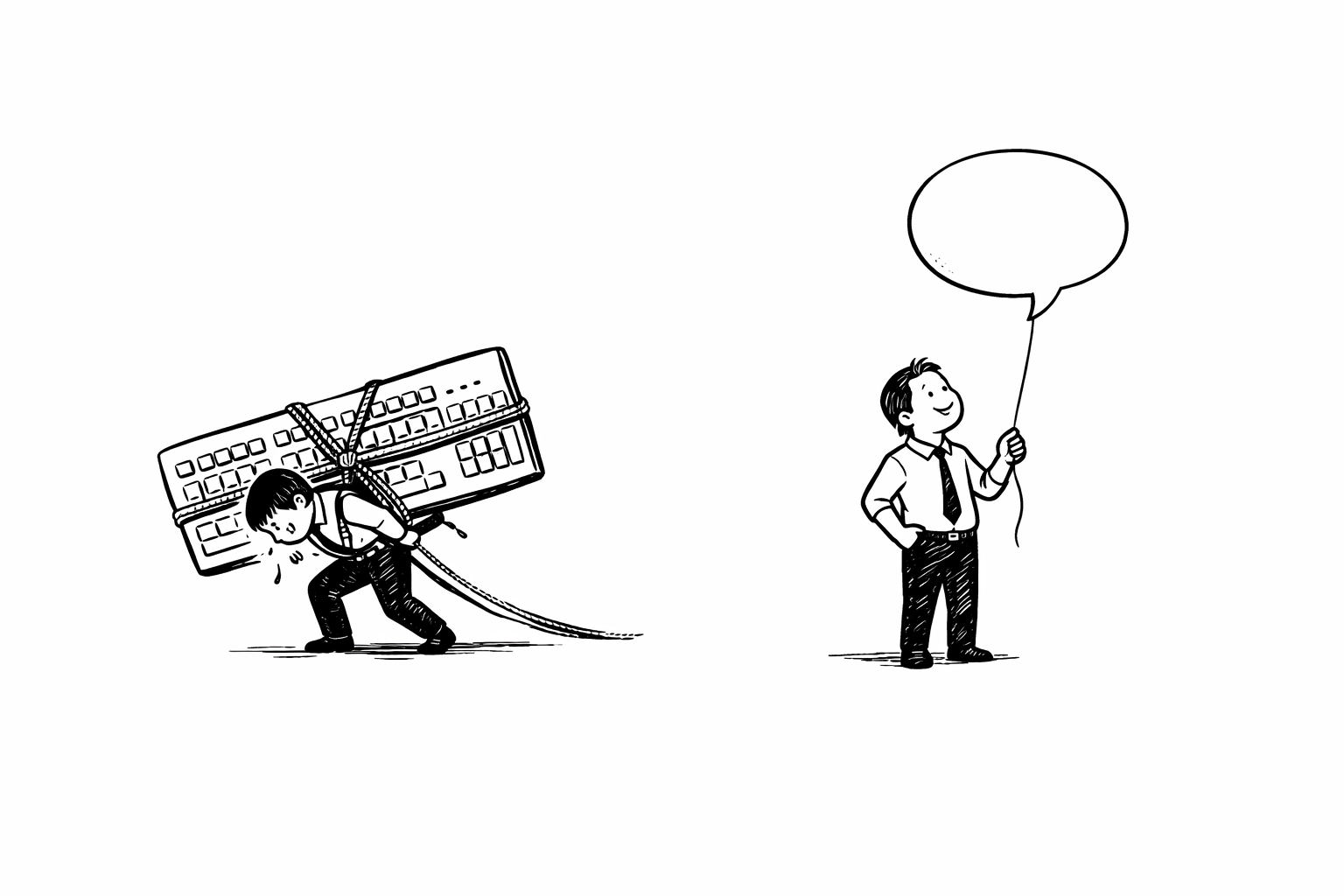
The High Cost of the "Keyboard Tax"
The primary reason 360 surveys suffer from low participation isn't a lack of care. It's a lack of time. In a fast-paced work environment, typing is a high-friction activity. We call this the "Keyboard Tax."
Think about the cognitive load required to provide quality feedback via text:
- Formulation: You have to decide what you want to say.
- Structuring: You have to organize those thoughts into coherent sentences.
- Editing: You have to check for tone, grammar, and clarity to ensure your message isn't misinterpreted.
- Data Entry: You have to physically type it all out.
This process takes 3x to 5x longer than simply speaking. When a manager has to provide feedback for five different peers and three direct reports, that Keyboard Tax adds up to hours of lost productivity. The result? People take shortcuts. They give "satisfactory" ratings without comments, or they provide generic, one-sentence feedback that offers zero value to the recipient.
The 2x Equation: Why Voice Doubles Participation
The math of participation is governed by a simple rule: Participation = (Perceived Value) / (Effort Required).
If the effort required is high, participation drops, no matter how much you emphasize the value of growth and development. By introducing voice-enabled feedback, you are slashing the "Effort Required" side of the equation.
1. Speed is the Ultimate Feature
The average person speaks at about 130–150 words per minute but types at only 40 words per minute. By allowing your team to speak their 360 feedback, you are giving them back 70% of their time. When a task that usually takes 20 minutes now takes 6 minutes, the psychological barrier to starting vanishes.
2. The "Mobile-First" Advantage
General surveys and 360s are often ignored because they require sitting down at a desk. Voice feedback allows for "dead time" utilization. A leader can complete a 360 review while walking between meetings or during a commute. This flexibility is why we see participation rates jump from the industry average of 30–40% to over 80%.
3. Lowering the "Inhibition Barrier"
Many employees struggle with "blank page syndrome." The pressure to write a "perfect" review causes procrastination. Speaking is natural. It's how we communicate every day. When the barrier to entry is as low as "press a button and talk," the feedback starts flowing immediately.
Better Data, Not Just More Data
Doubling participation is great, but quantity isn't everything. The real magic happens in the quality of the feedback.
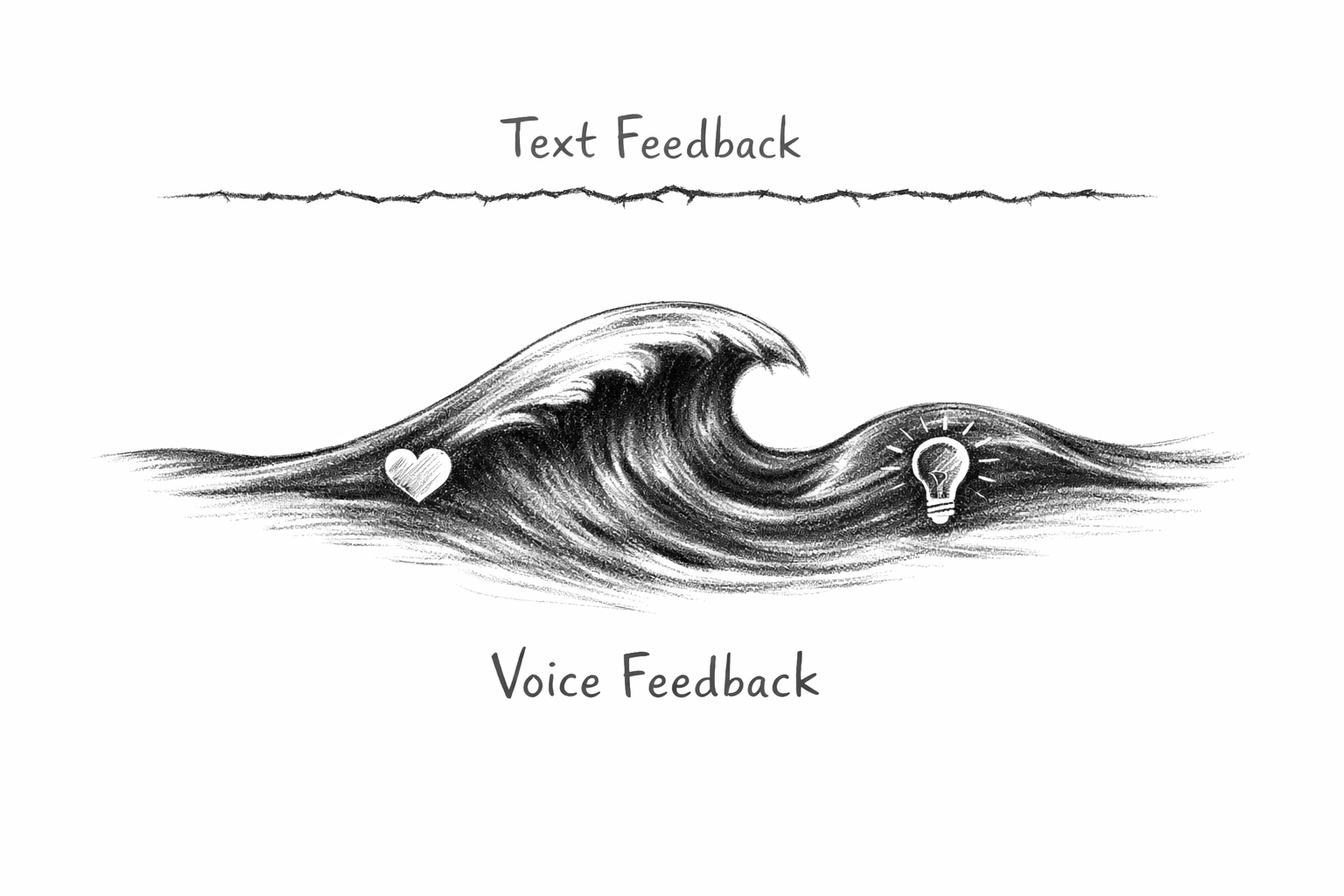
In traditional 360 surveys, text feedback is often cold, sterile, and occasionally misinterpreted. When someone types "You need to be more assertive in meetings," it can come across as a harsh critique.
When that same person speaks the feedback, the AI captures the nuance: "I'd love to see you be more assertive in meetings because your ideas are fantastic and I want the rest of the leadership team to hear them."
The tone of voice adds a layer of empathy and context that text simply cannot replicate. Voiceboard.ai uses advanced AI to transcribe and summarize these voice inputs, ensuring the recipient gets the heart of the message without the fluff, while retaining the constructive, human tone of the original speaker.
General Surveys: Capturing the Pulse in Real-Time
While 360 surveys are essential for individual growth, the same voice-first logic applies to general pulse surveys. If you want to know how the team feels about a recent pivot or the new office policy, don't send a 20-question multiple-choice form.
Send a single, voice-enabled prompt.
"Tell us one thing we could do better this week."
When employees can answer this in 15 seconds via voice, you get raw, honest, and timely data. You move from "annual snapshots" to a "live stream" of organizational health. This shift is essential for staying competitive in a market where talent can leave as quickly as they joined.
How to Implement Voice-First 360s Without the Headache
Transitioning to a more modern survey style doesn't require an overhaul of your entire HR stack. It requires a shift in mindset.
- Start with the "Why": Tell your team you are moving to voice feedback because you value their time. This immediately positions the change as a benefit to them, not just another corporate initiative.
- Keep it Focused: Don't ask 50 questions. Use the 360 format to ask 3–5 high-impact questions that require qualitative answers.
- Use the Right Tools: Use a platform like Voiceboard.ai that is built specifically to handle the transition from voice to actionable data. You don't want to be stuck listening to hours of audio; you want the AI to give you the insights.
- Close the Loop: The fastest way to kill participation (even voice participation) is to do nothing with the data. Ensure that every 360 survey results in a clear action plan.
The Future of Feedback is Frictionless
The "Simple Math" isn't just a catchy title—it's a fundamental truth of human behavior. We gravitate toward the path of least resistance.
For years, HR tech has made the mistake of adding more features, more boxes, and more "comprehensive" metrics, all of which added more friction. At Voiceboard.ai, we believe the future of performance management and 360 surveys is about subtraction.
Subtract the keyboard. Subtract the friction. Subtract the wasted hours.
When you make it as easy to give feedback as it is to have a conversation, you don't just get more participation—you get a more honest, transparent, and high-performing culture.
Ready to see the math work for your team?
Stop chasing people for their survey responses. Start listening to what they actually have to say. Experience how voice-first technology can transform your 360 process and turn feedback from a chore into a competitive advantage.
Start your first voice-enabled survey today at Voiceboard.ai
For more insights on the future of feedback, check out our latest deep dive: The AI Feedback Revolution.